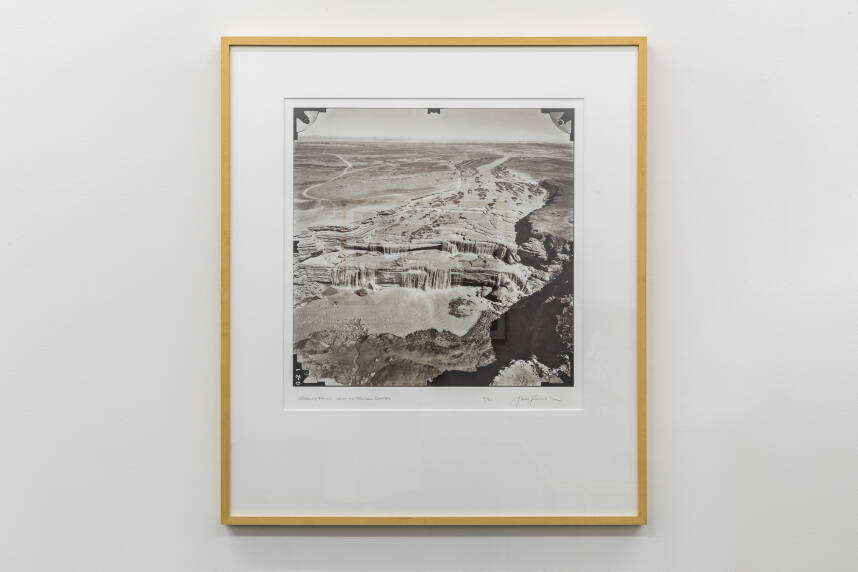
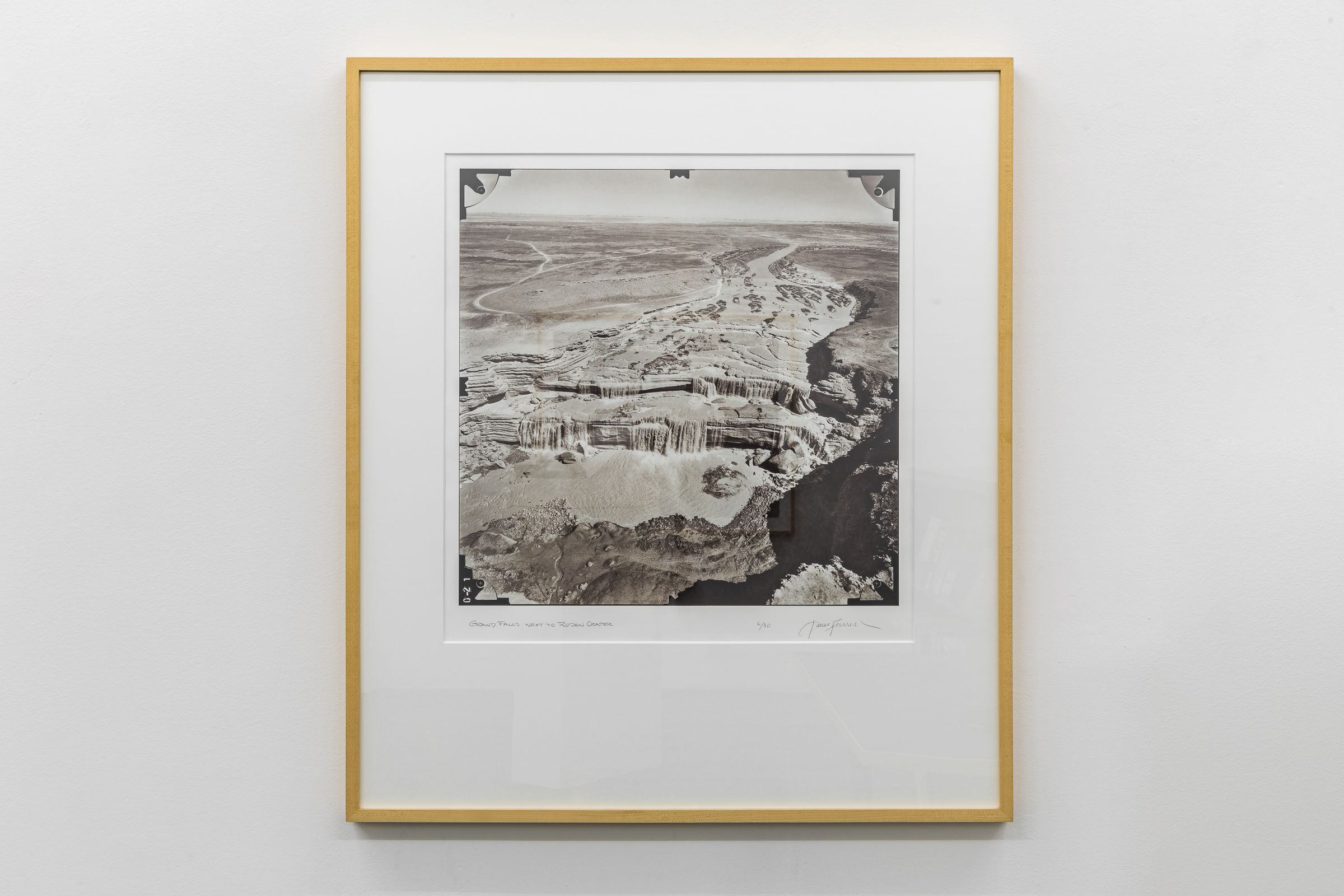
For seven months, James Turrell—who obtained his pilot’s license at the age of sixteen and whose passion for flying became a source of artistic inspiration—surveyed the United States in his single-engine Helio Courier, travelling from west to east and from Canada to the Mexican border. In 1974, he discovered Roden Crater in the vast open landscape of Arizona’s Painted Desert. In the extinct volcano, he found ideal conditions for creating a life’s work that emerges «out of the land and its relationship to the sky». Hidden within the volcano, and based on the precise astronomical and geological calculations of the trained mathematician Turrell, 24 viewing spaces and six tunnels have been realised since the 1990s. Once completed, they will, as the artist describes, bring «a piece of the sky down». Like an architectural camera obscura, Roden Crater projects images of celestial bodies such as the sun and moon into its chambers, bringing light from the «outside» to the «inside».
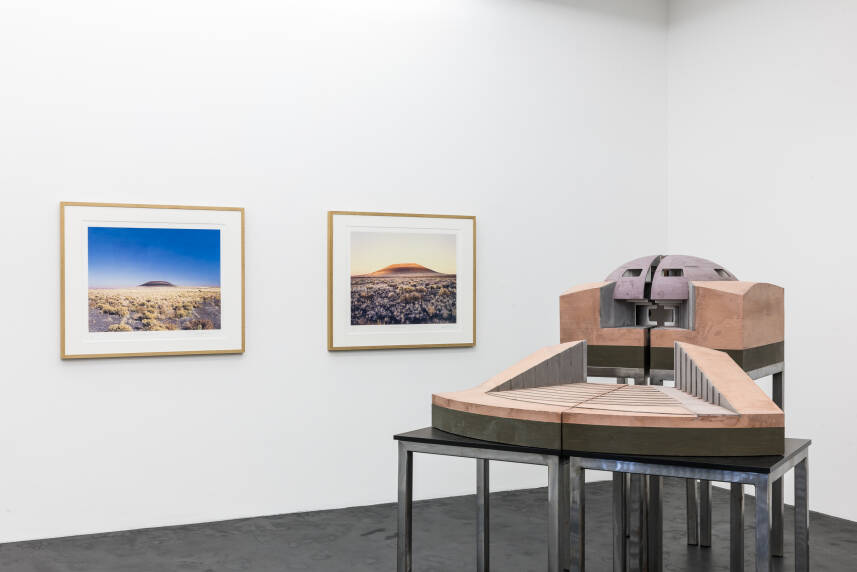
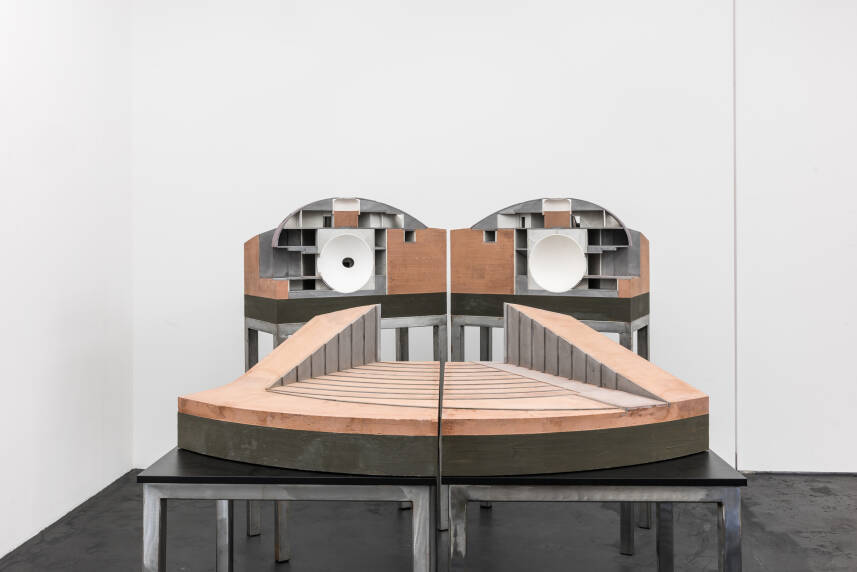
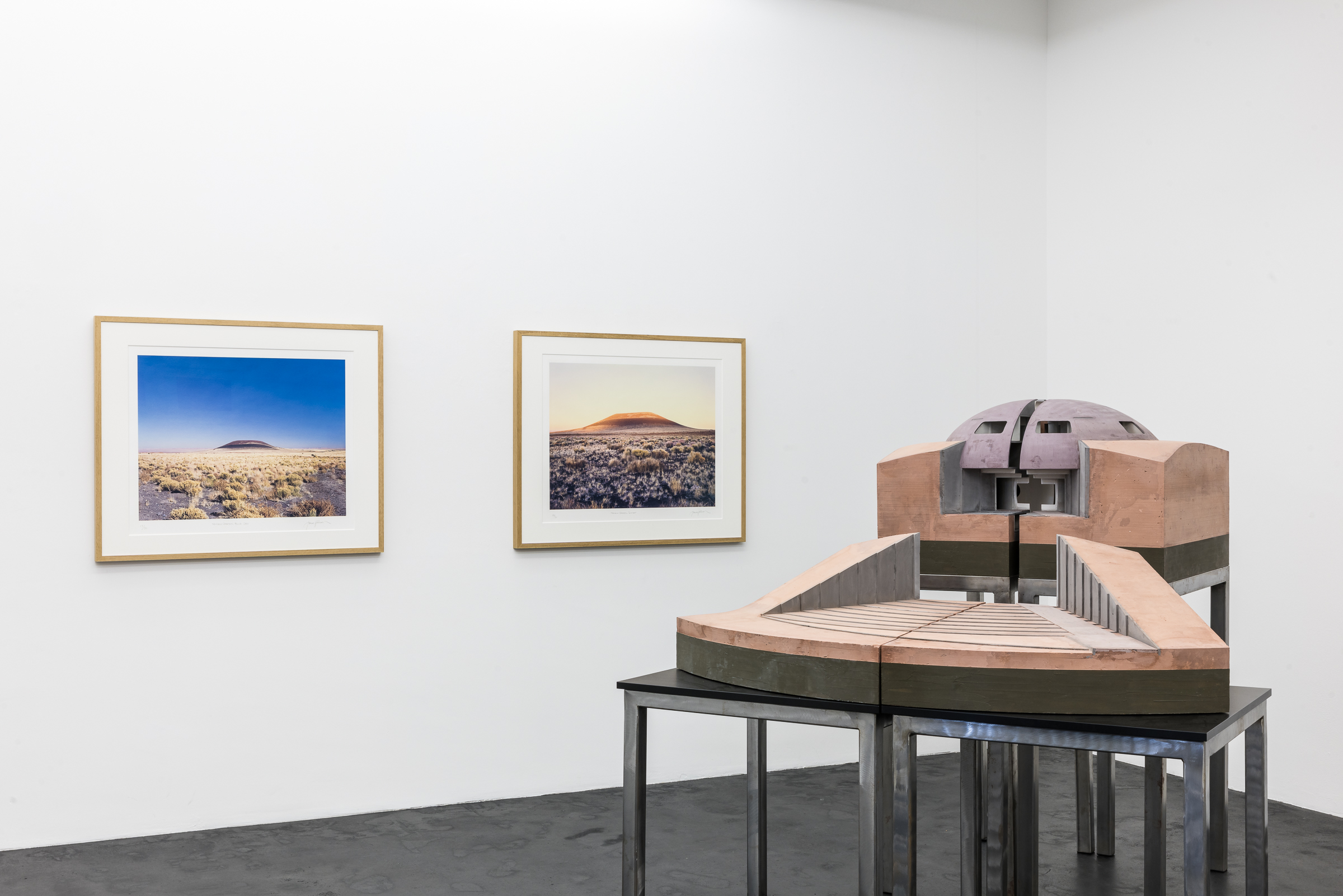
This principle is impressively demonstrated in one of the largest and most complex planned, yet still unfinished, interior spaces of Roden Crater: the Fumarole. Schematically positioned between the crater’s center (Crater’s Eye) and its easternmost point (East Space), the «Fumarole Space» forms a central location that enables new perceptions of time and space. A staircase leads up the volcanic cinder cone to a chamber almost entirely concealed within the volcano. Within it lies a spherical chamber, partially opened at several points, measuring nearly 13 meters in diameter. When the exterior door is closed, the sphere functions as an architectural Camera Obscura, allowing a projected image of celestial bodies to appear through a viewing aperture inside the space. From the «Fumarole Space», a telescopically designed tunnel extends into the «Sun and Moon Space», where the movements of celestial bodies and the cycles of time become directly perceptible. Häusler Contemporary is pleased to exclusively present the historic original model of the «Fumarole Space» (1998) from the artist’s studio, which, in four parts, offers rare insights into this monumental architecture. The «Fumarole Space» constitutes an important connecting point within Roden Crater – in the exhibition, the model, presented as a central work, brings together the additional works on paper and the sculpture within a shared conceptual framework.
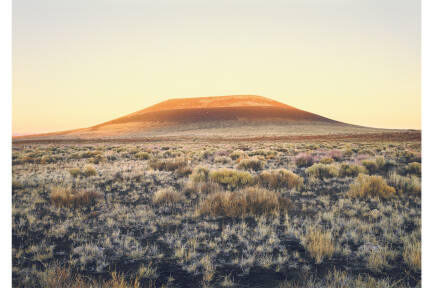
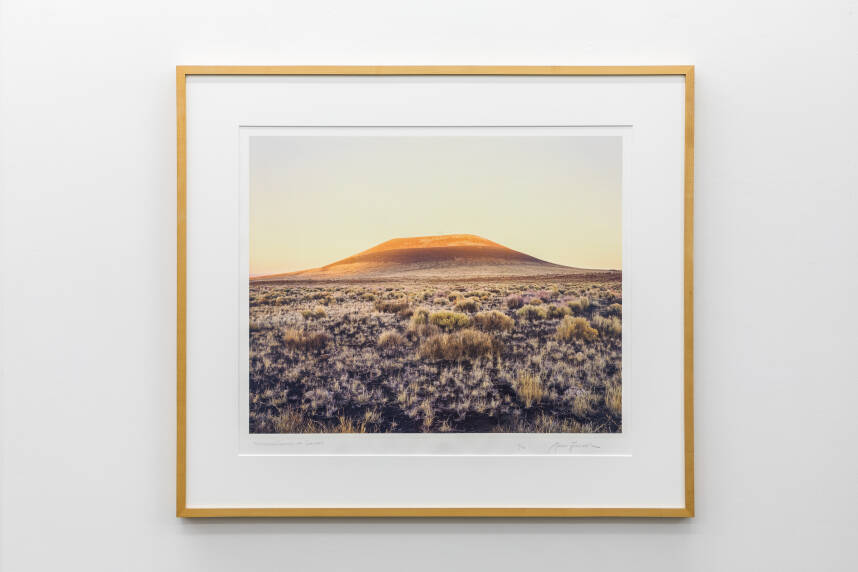
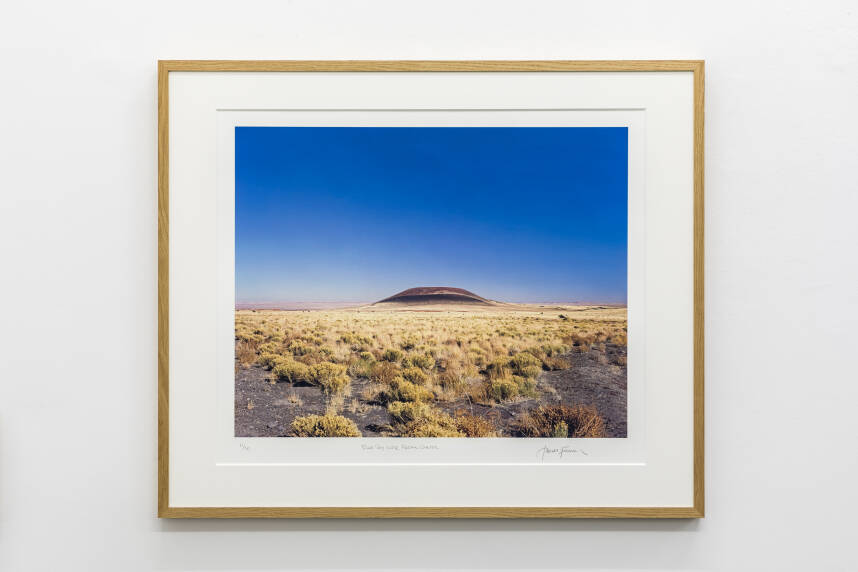
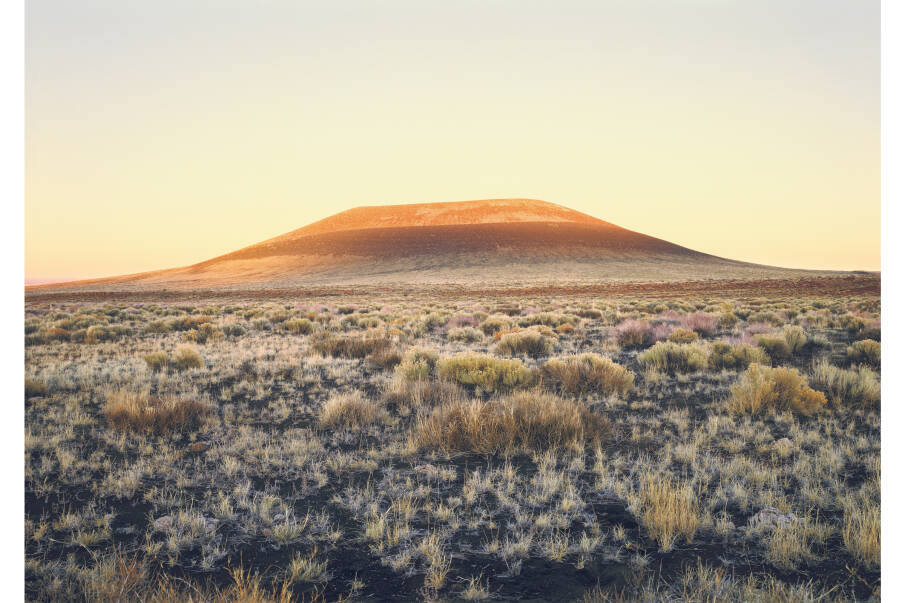
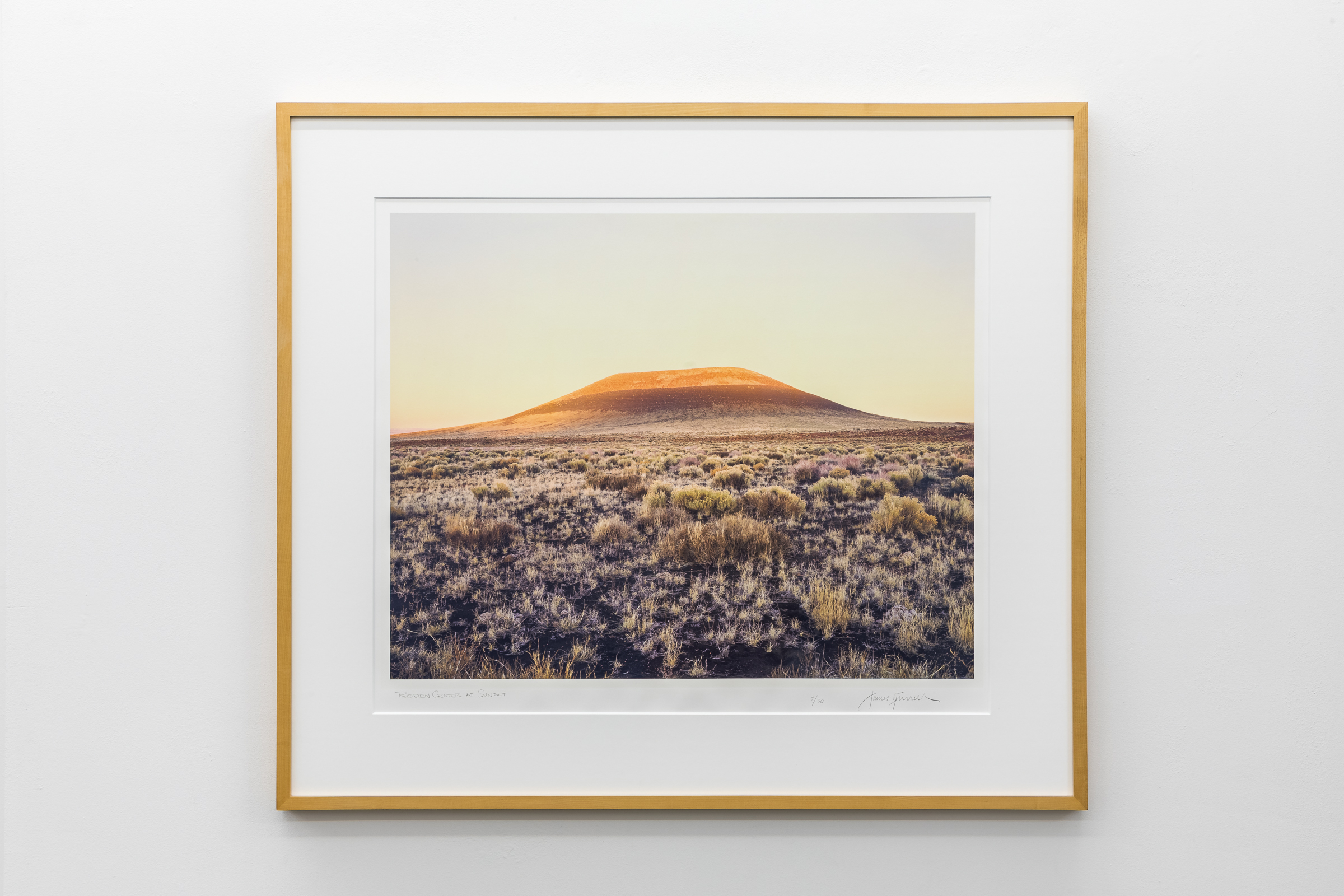
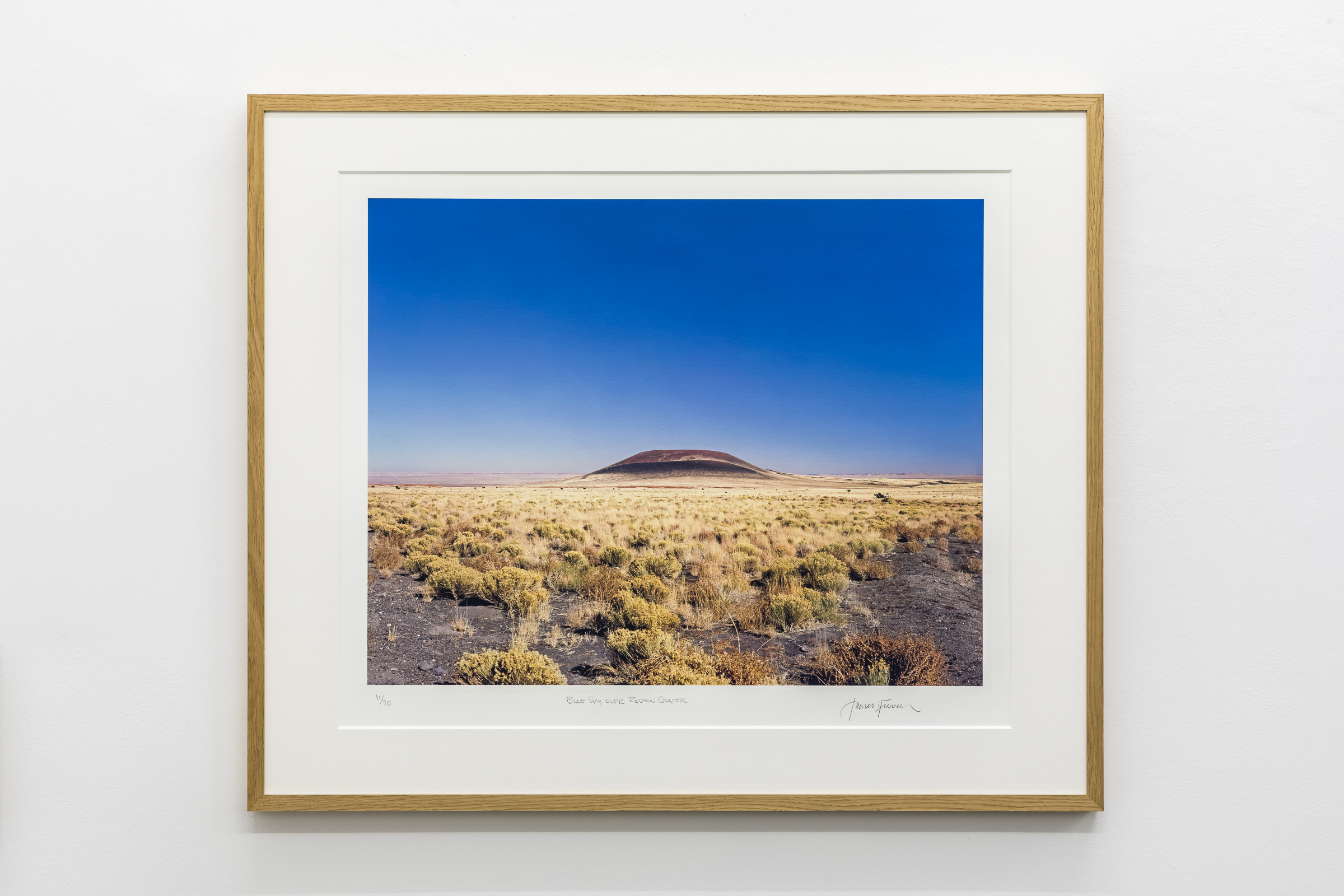
Looking back from the entrance of the Fumarole, a panorama unfolds across the vast and intensely coloured desert landscape of the Painted Desert. Amid the vegetal and rocky structures that render the earth ochre, red, and black, the cone-shaped crater—more than 400,000 years old—stands out, possessing «an impressive presence in itself». In the vividly coloured pigment prints «Blue Sky over Roden Crater» and «Sunset at Roden Crater» from 2009, the artist captures the sensation of living on a planet—without needing to look back at Earth from the moon. At the same time, the almost untouched natural environment depicted in these works reflects Turrell’s intention to preserve the volcano as a site.
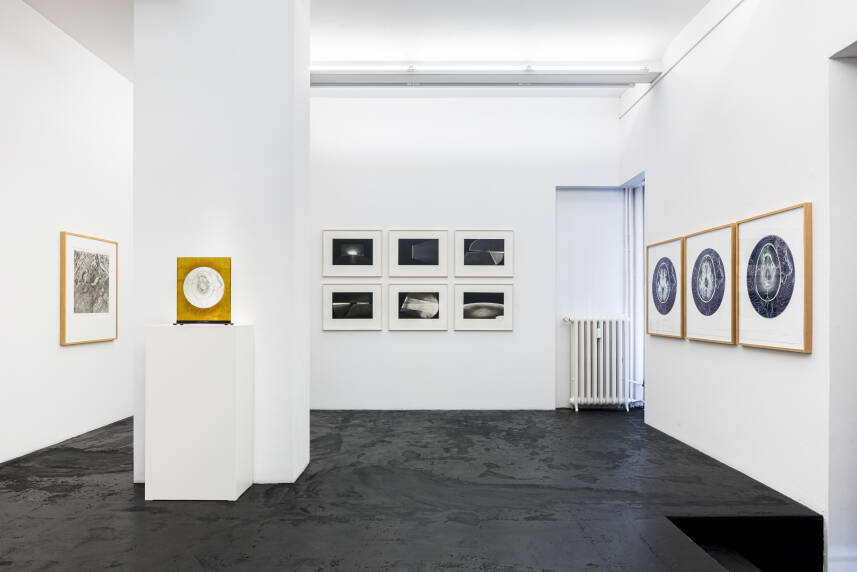
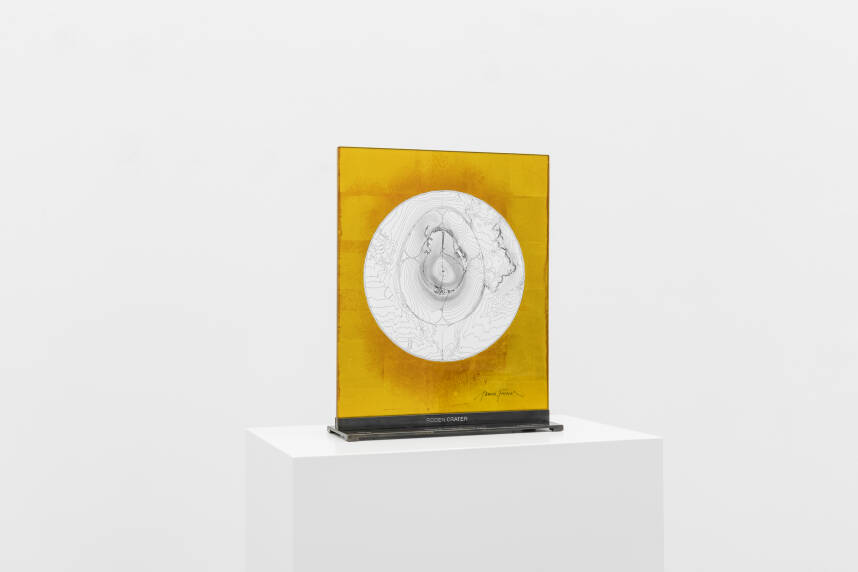
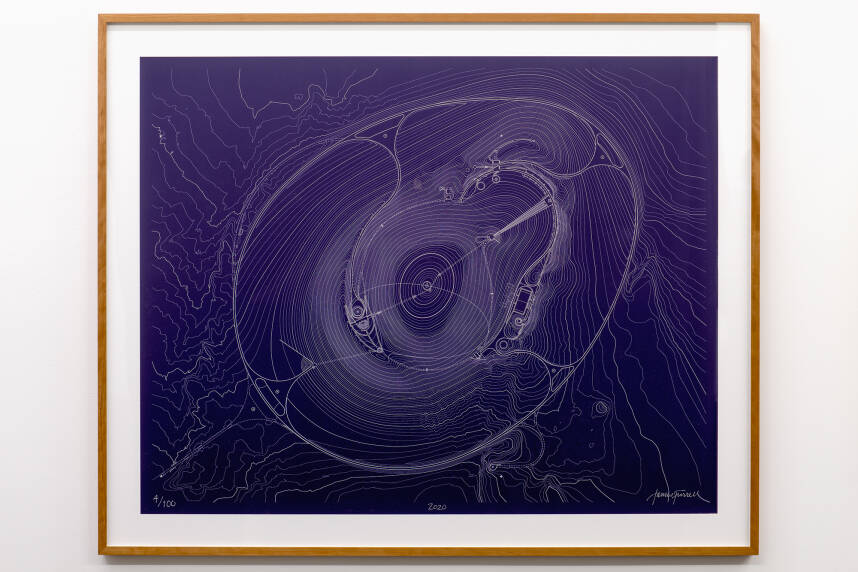
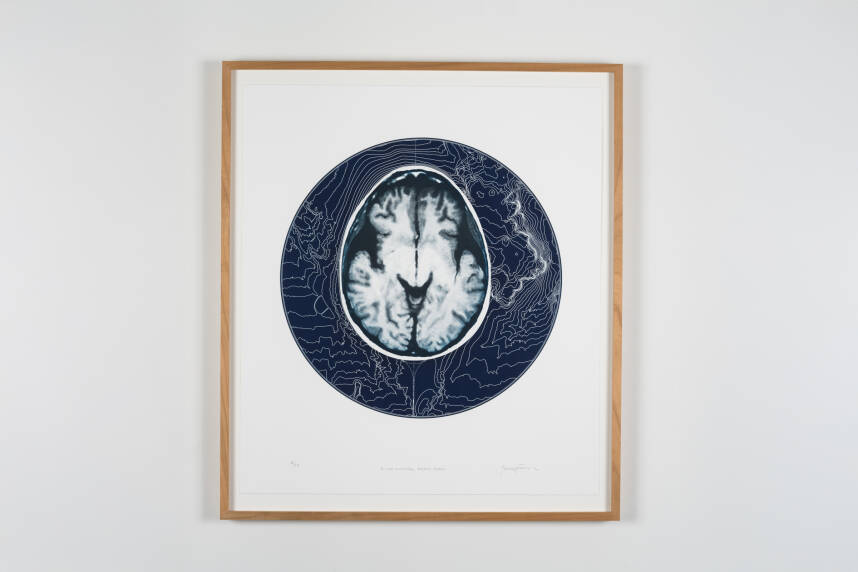
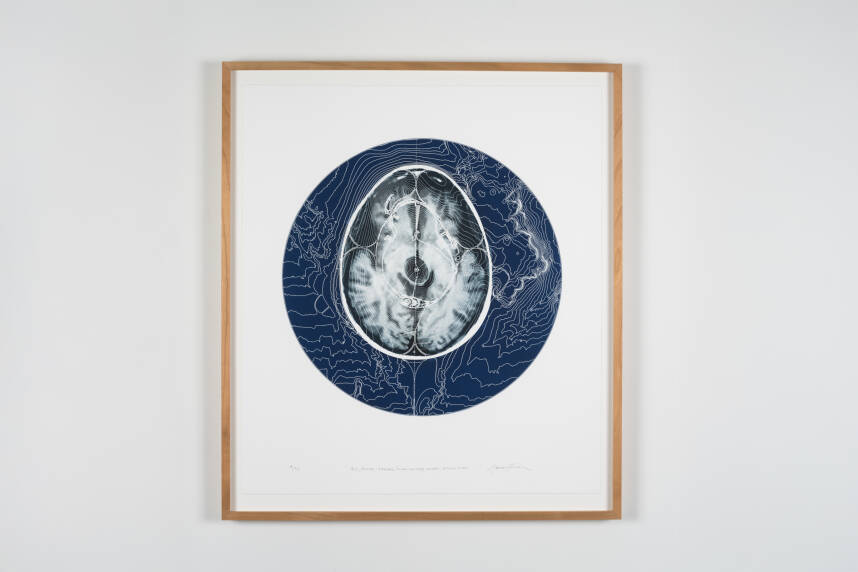
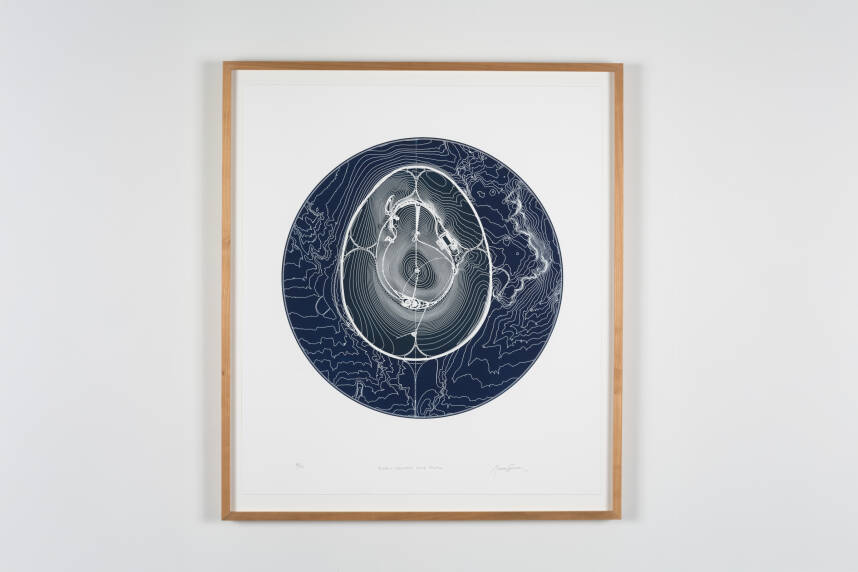
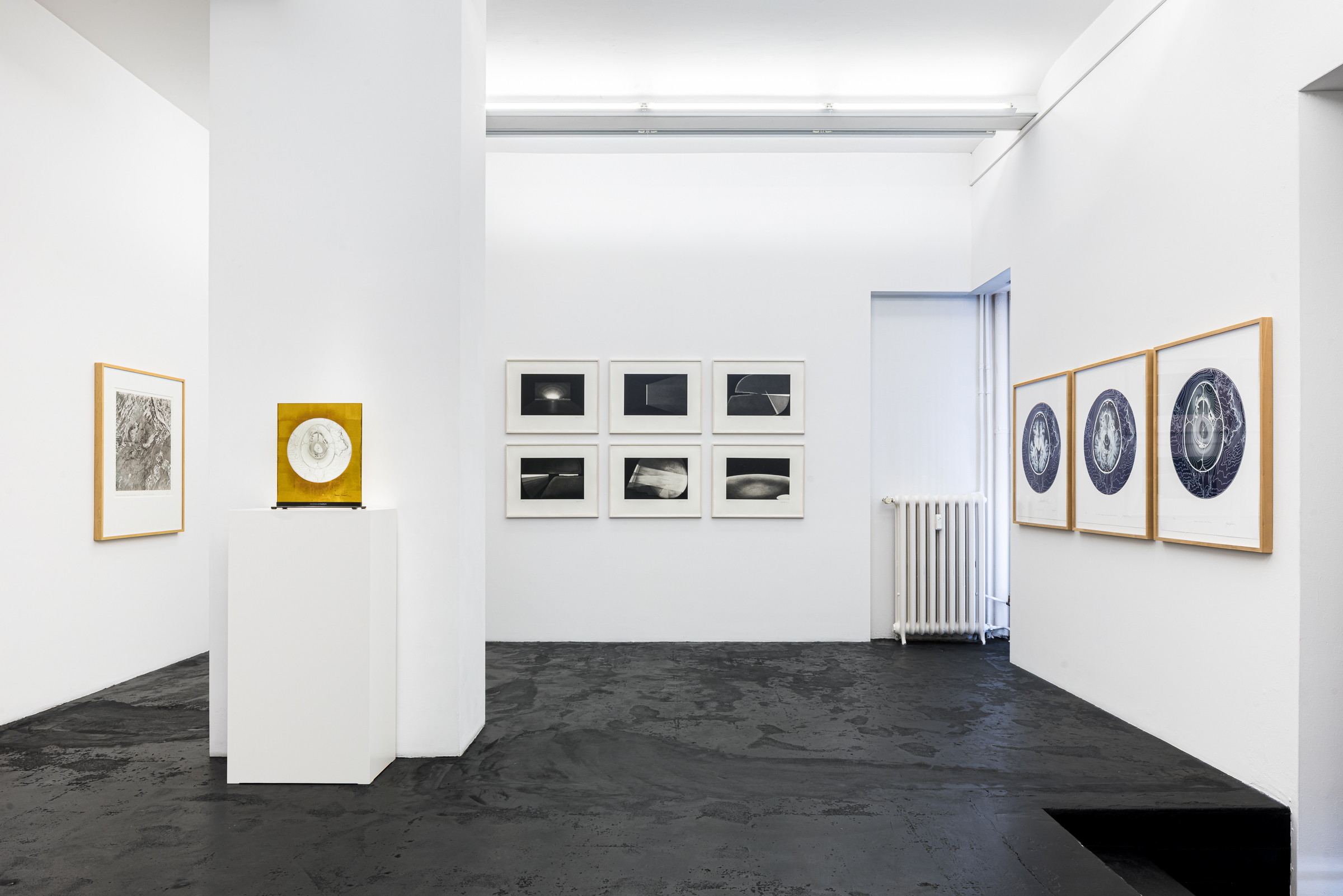
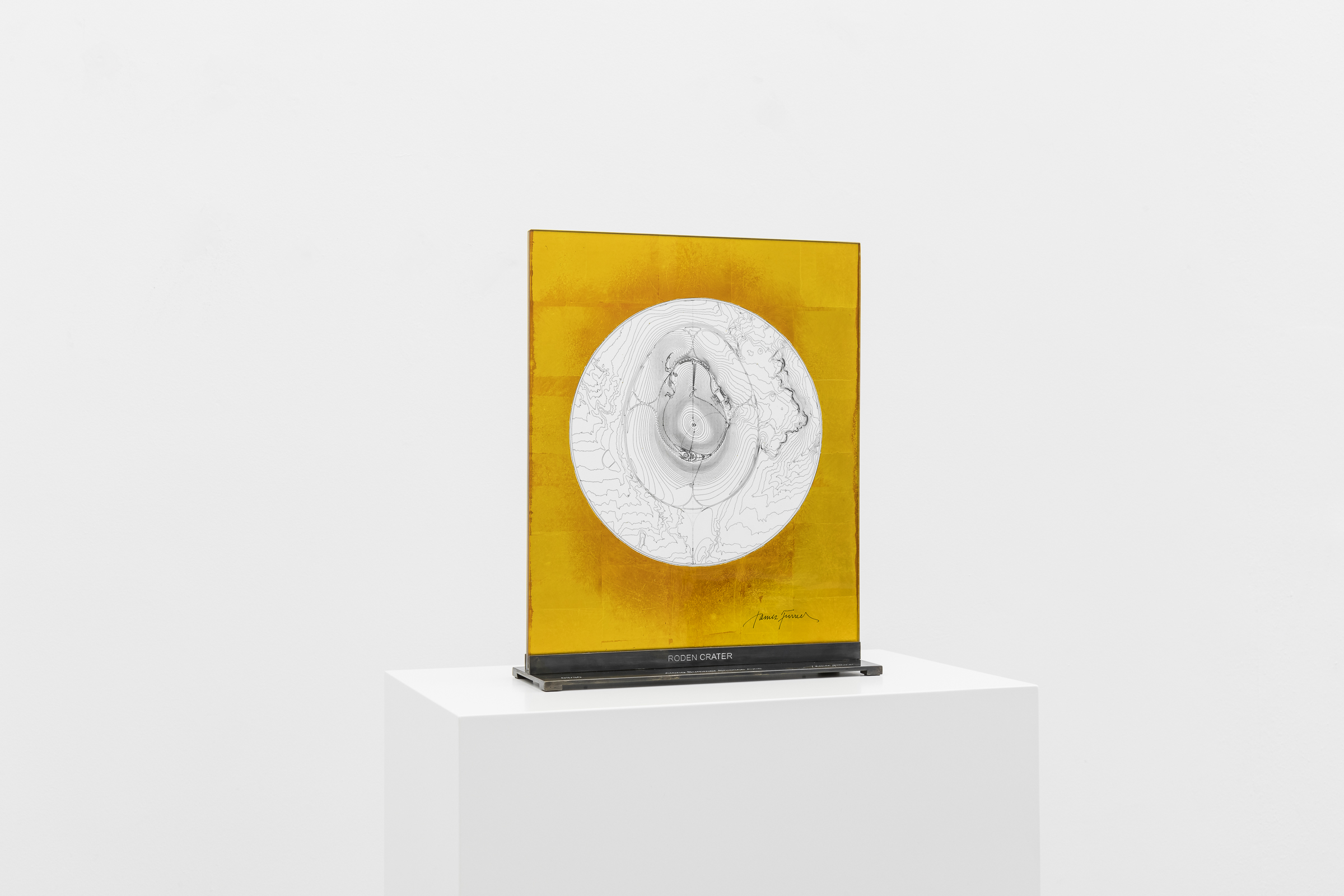
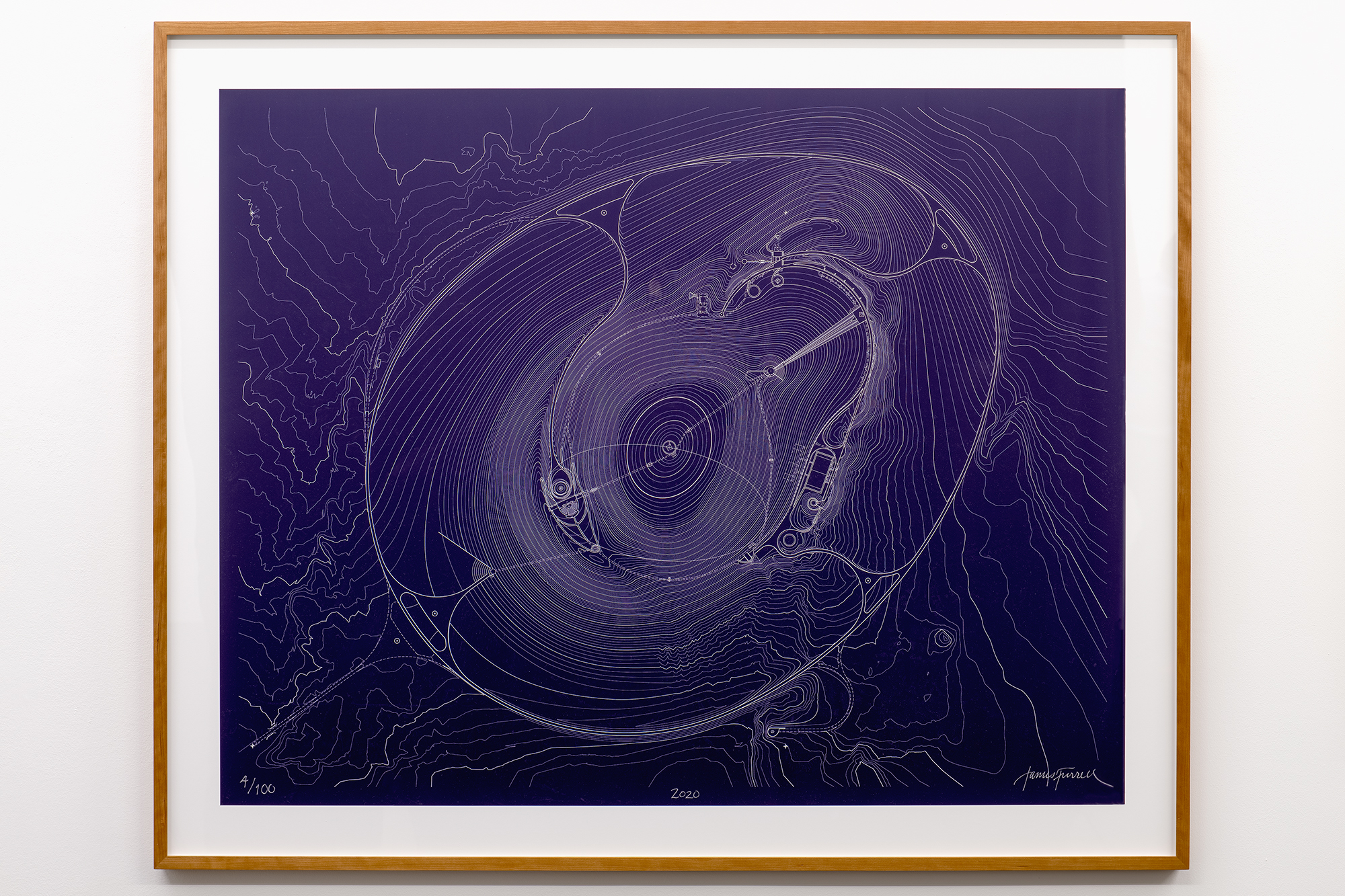
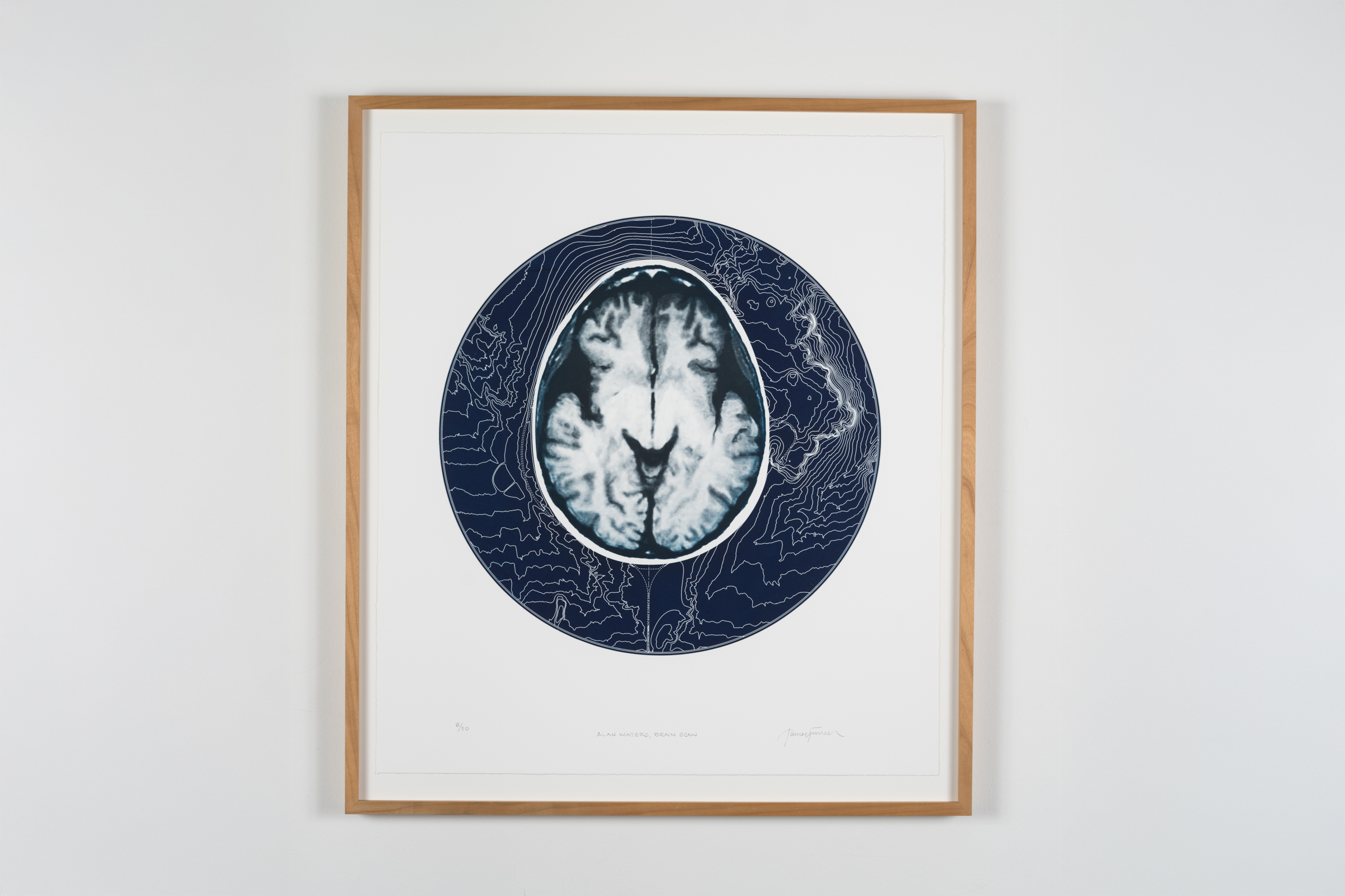
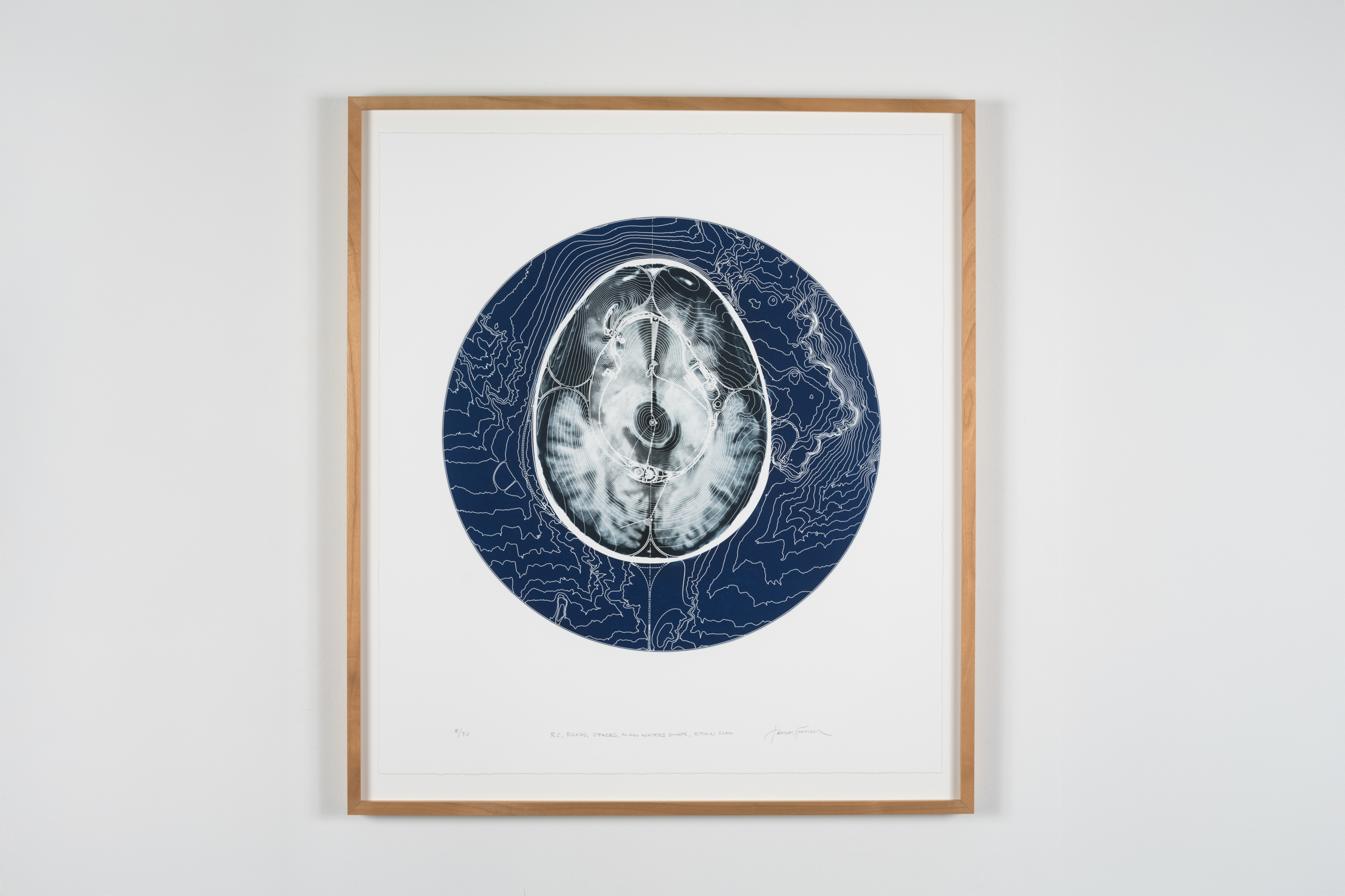
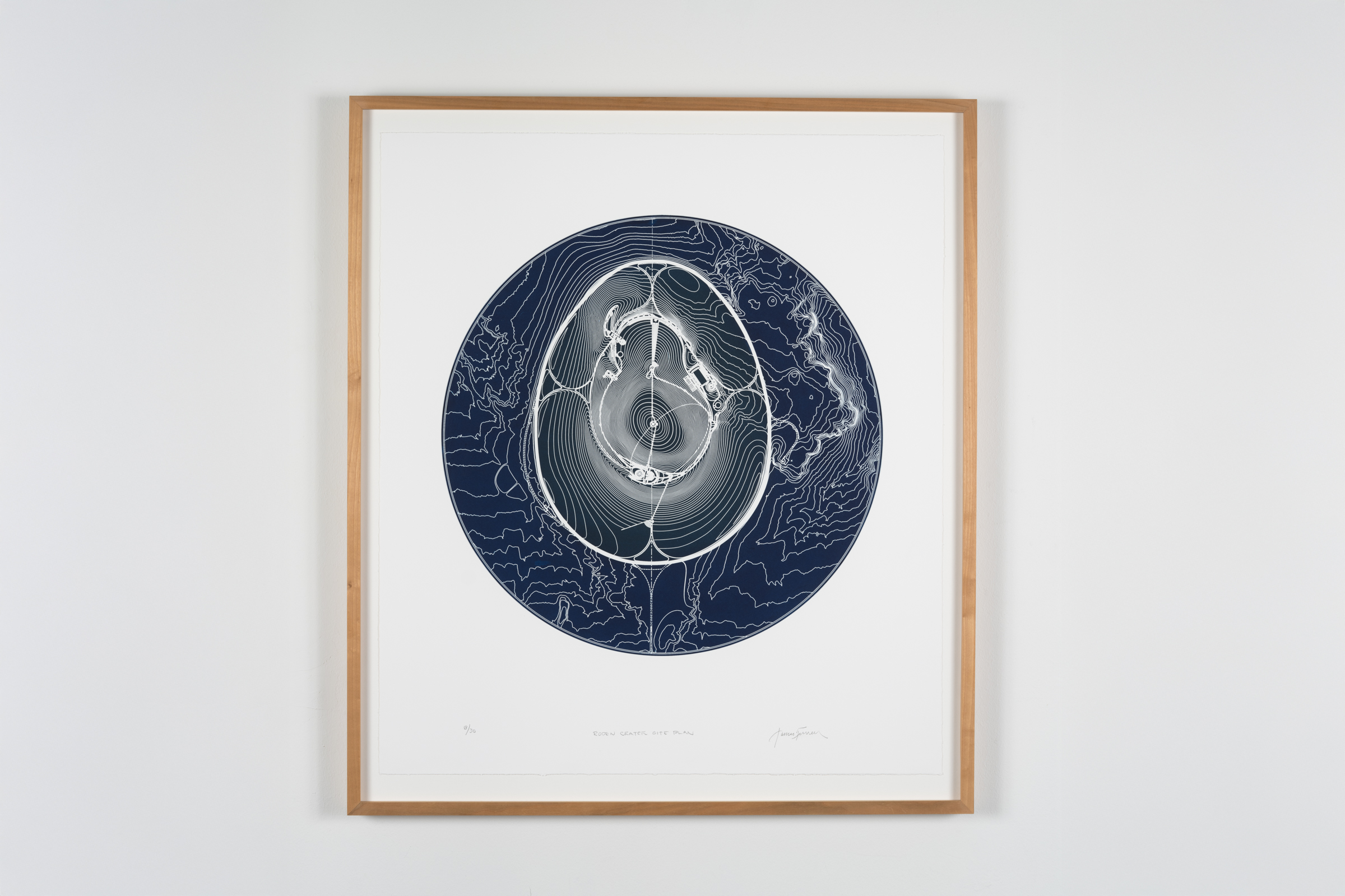
In harmony with the crater’s unique topography, a singular sensory experience of natural and artificial light has been taking shape within its interior since construction began in 1997. Through a series of complex building phases, the Crater’s Eye, the South Lodge, and the Sun and Moon Space, together with their connecting tunnels, have been realised; with the northeast-running Alpha East Tunnel, its connection to the central crater chamber, and the Alpha East Tunnel Portal, an essential circulation system within Roden Crater was established. As Roden Crater remains inaccessible to the public and is still under construction, Turrell’s topographical plans provide access to its structure. The large-format inkjet blueprint «Roden Crater Site Plan» (2021), the gold-leaf sculpture «Roden Crater Site Plan along the Summer Solstice Axis» (2024), and the most recent series of works on paper from 2025, in which the plans are for the first time overlaid with Turrell’s brain scans, testify to a Gesamtkunstwerk that has been in planning and execution for more than fifty years.
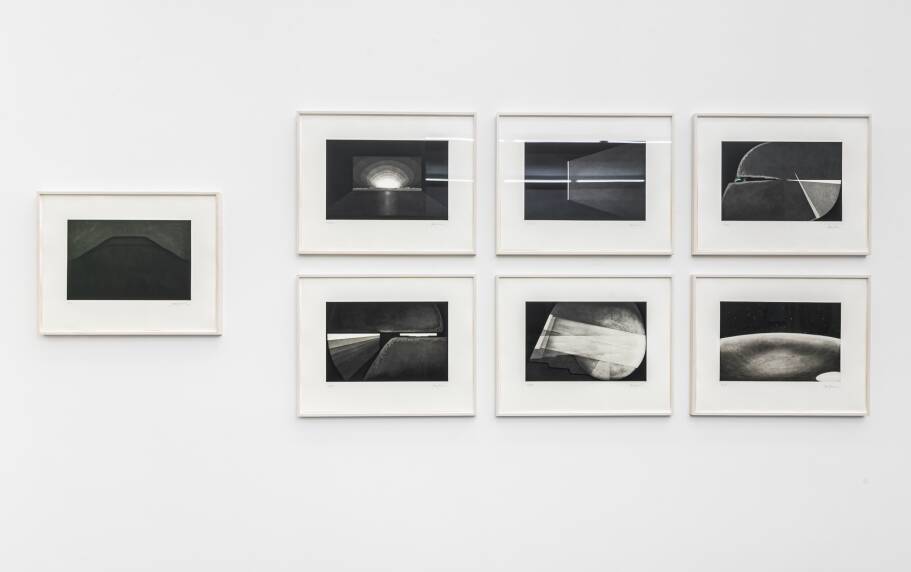
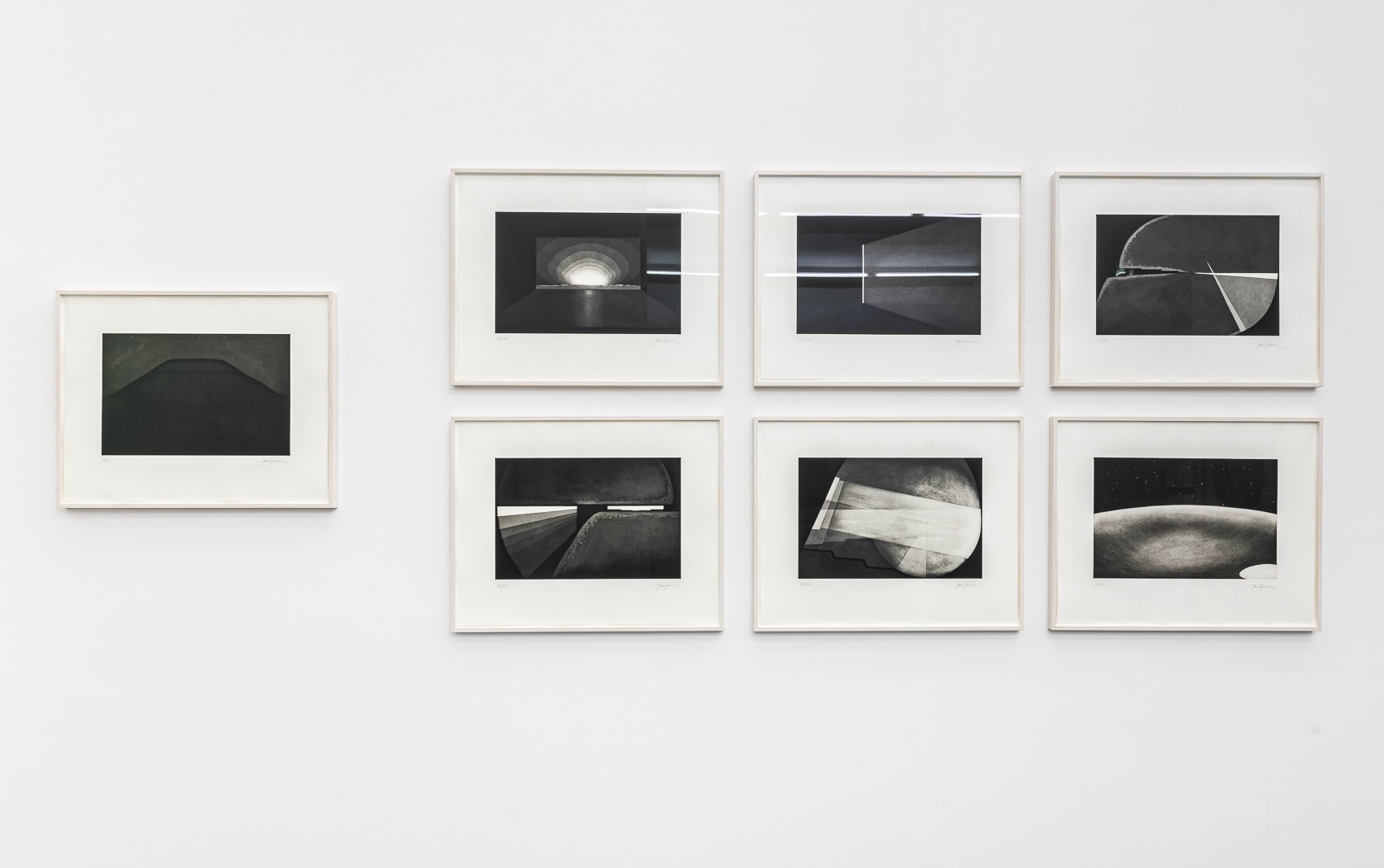
Within Roden Crater, architecture, Land Art, astronomy, physics, earth sciences, medicine, perceptual psychology, art history, and mysticism culminate in a life’s work, in Turrell’s opus magnum. It brings together insights from earlier experiments—such as those undertaken within the Art and Technology Program—and various bodies of work including Projection Pieces, Skyspaces, and Ganzfelds. This is illustrated in the exhibition by the portfolio «Deep Sky» (1984), created in collaboration with the renowned Zurich master printer Peter Kneubühler. The seven-part aquatint presents landscapes and abstractions of pure light and shadow in finely nuanced, dark tonal fields. The first sheet depicts the crater beneath a star-filled night sky, while another shows a beam of light falling into a darkened space, establishing connections to the groundbreaking Shallow Space Constructions of the late 1960s.
James Turrell’s art is existential, addressing the origin of all life: sky, earth, light. Within Roden Crater, phenomena that are often hidden and intangible are brought close to us, becoming visible through Turrell’s celestial observatory and through human perception. The exhibition «James Turrell. Opus Magnum: Roden Crater» offers an intimate approach to Roden Crater through the autonomous works of art that emerged in the course of the project: «My work is about how the act of seeing can create colour and space. But it is never just an impression one receives; the eyes actually experience light in its physical presence, and it is present as well.» JAMES TURRELL
(Susanne Kirchner)
James Turrell, cited in Michael Rotondi, “A Journey into the Desert, The Painted Desert,” in: Peter Noever (ed.), The Other Horizon, MAK Vienna 1998/1999, p. 188.